
How West Virginia Inmate Records Work
West Virginia does not operate as a simple one-county, one-jail-roster state. WVDCR runs a statewide regional jail system for county jail custody, a prison and supervision search for sentenced or supervised offenders, and Daily Incarcerations for recent regional jail admissions. County sheriffs, municipal police departments, prosecutors, and courts still matter, but many custody lookups point back to a WVDCR tool.
The most common mistake is using the right name in the wrong system. A newly booked person may not appear in the prison search. A sentenced state prisoner may no longer appear in the regional jail search. A federal inmate in Alderson, Beckley, Gilmer, Hazelton, McDowell, or Morgantown belongs in BOP. Immigration detention belongs in ICE ODLS. VINE is best for custody notifications, not a replacement for the official roster.
The WVDCR offender-search hub groups the state's core custody search links.
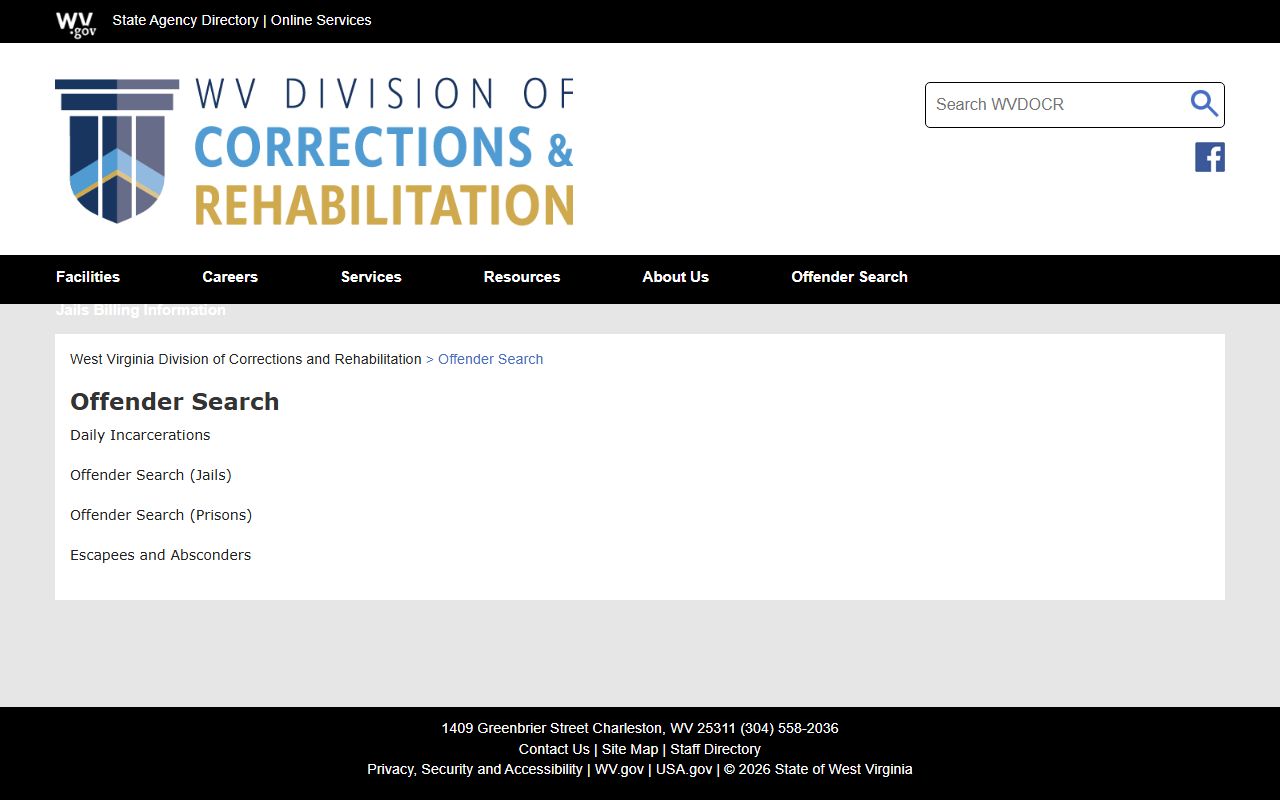
Use the hub when the record could be either jail custody or state prison custody.
How to Find West Virginia Inmate Records
The best search path follows the custody path. Start with the arrest date and location if known. If the arrest was recent, check the Daily Incarcerations page and regional jail offender search. If sentencing has occurred, search the prison and supervision locator by OID or partial first and last name. If the court record is the main question, use WVPASS or Magistrate Case Record Search rather than relying on a custody page.
- Check Daily Incarcerations for recent regional jail admissions by county or by institution.
- Search the regional jail offender search with at least the first three letters of the last name.
- Search the prison and supervision locator with an OID or the first three letters of both first and last name.
- Use the County Directory when the county of arrest, sheriff record, or court clerk is the key fact.
- Move to BOP, ICE, or VINE only when the custody type calls for those systems.
The Daily Incarcerations page is the state source for recent jail admissions by county or institution.
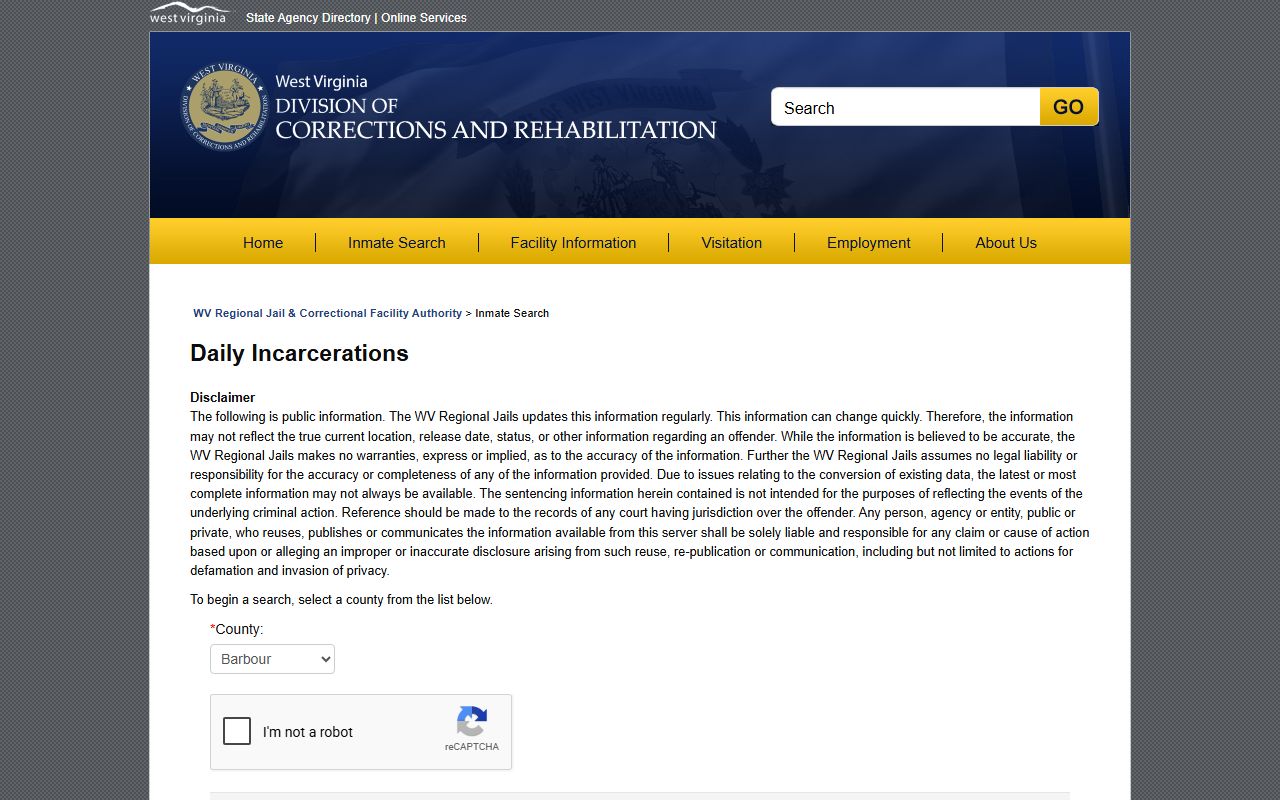
Daily listings change, so use them as a current route into the custody record rather than a fixed historical archive.
West Virginia Jail Search Fields
The regional jail search form is narrow but useful. The research notes that the search begins with at least the first three letters of the last name, and the first name is optional. The prison and supervision search has a different rule: at least the first four numbers from an Offender ID, or the first three letters of both first and last name. These field rules are important because a failed search may reflect a field mismatch rather than absence from custody.
| System | Required search field | Covers |
|---|---|---|
| Regional jail offender search | At least first three letters of last name; first name optional | Regional jail custody and county jail equivalents |
| WVDCR prison/supervision search | OID first four numbers, or first three letters of first and last name | Prison, active supervision, parole status |
| BOP inmate locator | Number or name search | Federal inmates from 1982 to present |
| ICE ODLS | Name/country/date of birth or A-number | Immigration detainees |
The regional jail offender search is the direct form for county jail custody questions.
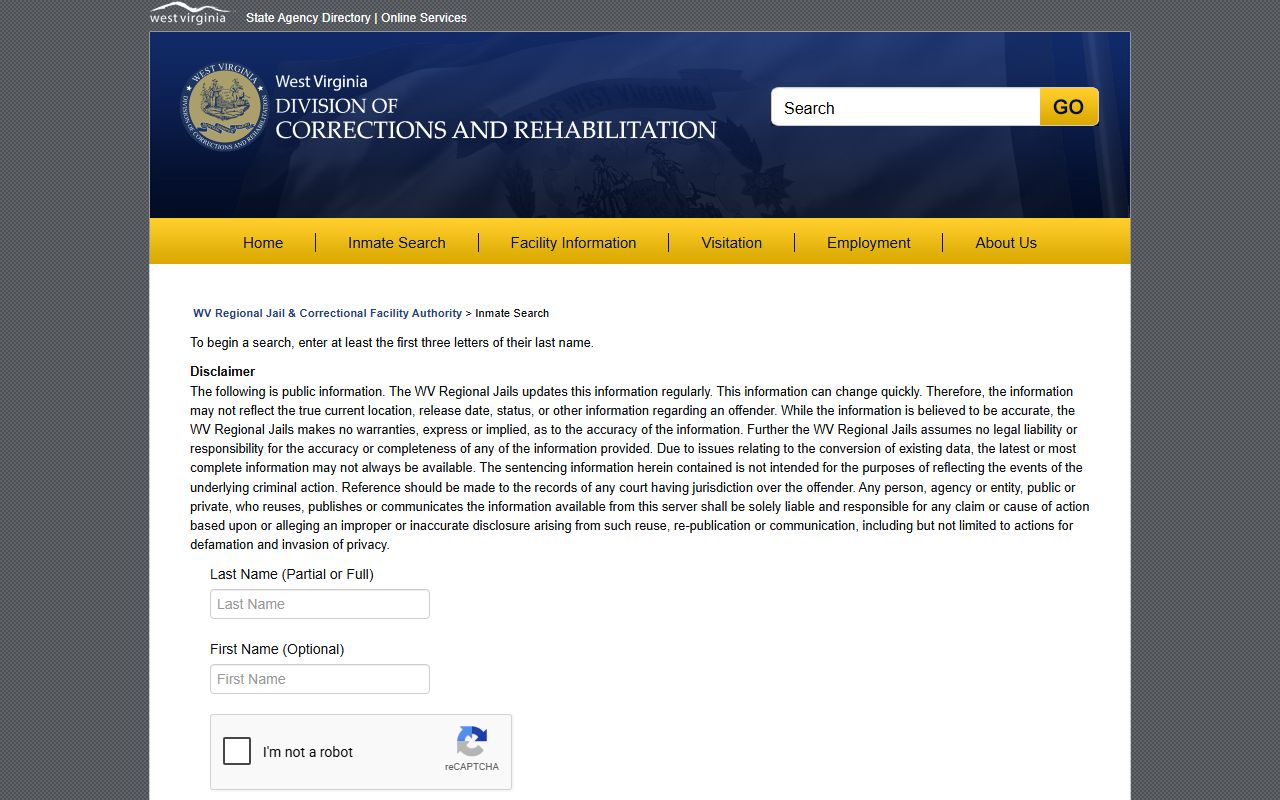
The form's last-name rule should be tried before assuming the person is not in a regional jail.
What West Virginia Inmate Records Show
Inmate records are custody records, not full criminal histories. A regional jail entry may show identifying details, booking or custody location, charges, status, and a booking image when available. The WVDCR prison search is focused on active prison or supervision status and uses the OID. The public disclaimers warn that information can change quickly and may not reflect true current location, release date, status, or other offender information.
| Field | What it shows |
|---|---|
| Name and identifiers | Basic identity fields used to distinguish people with similar names. |
| Booking or offender number | A jail booking number or WVDCR OID, depending on the system. |
| Facility | The regional jail, prison, or supervision location currently listed. |
| Charges or sentence context | A custody reference that should be checked against court records. |
| Status or release cue | A current custody clue, not a guaranteed release calculation. |
West Virginia Custody Systems
Each lookup channel has a job. WVDCR covers regional jail and state prison custody. BOP covers federal prisoners. ICE covers immigration detainees. VINELink gives custody status and notification functions. Court portals confirm case details. Public-records requests fill gaps when a portal does not show the needed record.
| Custody or record need | Where to look | What to verify |
|---|---|---|
| Recent arrest | Daily Incarcerations and regional jail offender search | County, institution, booking status |
| Sentenced state prisoner | WVDCR prison and supervision search | OID, facility, supervision status |
| Federal inmate | BOP inmate locator | Register number, facility, release date caveats |
| Immigration detainee | ICE ODLS | A-number or name-country-birthdate data |
| Charge or hearing | WVPASS or Magistrate Case Record Search | Case number, charge status, clerk records |
The BOP inmate locator is the correct channel for federal prisoners in West Virginia.
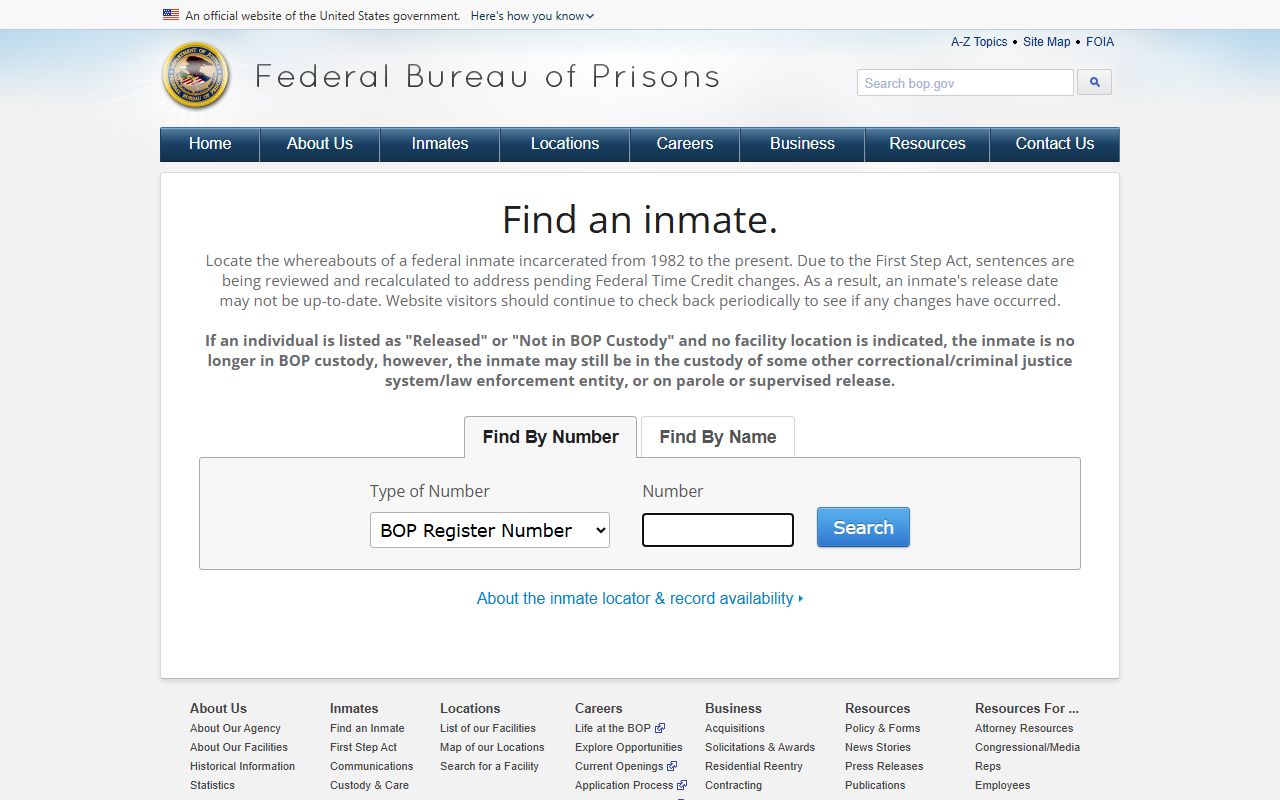
BOP records are separate from WVDCR, even when the federal facility is physically in West Virginia.
West Virginia Inmate Record Requests
West Virginia FOIA provides the request framework for state and local public bodies. Requests go to the custodian of the record and must state the information sought with reasonable specificity. A WVDCR inmate record request should identify the person, OID if known, facility, date range, and record type. A sheriff or municipal police request should go to the arresting agency. A docket, sentencing order, or hearing record should go to the court clerk or court portal.
Section 29B-1-3 requires a response as soon as practicable and within five business days, excluding weekends and legal holidays. Section 29B-1-4 lists exemptions that can limit release. Expect limits for medical records, juvenile records, victim data, active investigations, classification files, and security-sensitive jail information. The WVDCR contact page is the statewide agency contact route.
Good requests avoid broad phrases such as "everything about this inmate." A more useful West Virginia request names the person, gives an OID or booking number if known, identifies the facility or county, gives a date range, and names the record type. That can mean booking records, commitment records, custody status records, jail admission records, or correspondence about a specific incident. If the request is really for a sentencing order, judgment, bond order, or indictment, the court clerk is the better custodian.
The central WVDCR contact path helps with agency routing, while the custodian rule controls formal record requests.
Regional Jail Record Routing
The 10 regional jails are the reason many West Virginia inmate records searches feel county-specific and statewide at the same time. Central Regional Jail serves counties such as Braxton, Calhoun, Clay, Gilmer, Lewis, Nicholas, Roane, and Webster. Eastern serves Berkeley, Jefferson, and Morgan. North Central serves a broad north-central group including Doddridge, Harrison, Marion, Monongalia, Tyler, Wetzel, Wood, Wirt, Ritchie, and Pleasants. Southern serves Raleigh, Fayette, Greenbrier, Wyoming, Summers, Mercer, and Monroe.
That service pattern means a searcher should not stop when the county name and facility county do not match. The arrest can be in one county, the jail can be in another county, and the court record can remain in the arresting county. A good lookup keeps those threads separate: custody in WVDCR, court records in the county case system, and local reports with the arresting sheriff or police department. The same point applies after sentencing. A person committed from Kanawha, Berkeley, Wood, Monongalia, Cabell, Harrison, Marion, Raleigh, or Mercer may later appear in a WVDCR prison population table by county of commitment rather than in the jail that first booked the person.
When a search fails, try the official fallback chain before drawing a conclusion. Spell the name several ways within the portal's field rules, check the county and facility directory, review court records for the last known case, and use VINE for notification. A "No results" answer can mean release, transfer, discharge, spelling mismatch, wrong custody system, or a record outside the public portal's scope.
| Record question | Best starting point | Why it matters |
|---|---|---|
| Where is the person held now? | WVDCR regional jail or prison search | Custody location changes quickly. |
| What charges were filed? | WVPASS, magistrate search, or local clerk | Booking charges can differ from filed charges. |
| Who made the arrest? | County sheriff or municipal police records | Incident reports are not WVDCR records. |
| Will status changes be reported? | West Virginia VINE / VINELink | Notification is separate from roster lookup. |
VINE and Court Checks
VINELink and the court portals complete many inmate records searches. West Virginia VINE is a custody-status and notification service. The WVDCR victim services page says VINE was activated in December 2002 and gives 1-866-WV4-VINE as the phone route. The Judiciary court-record access page links statewide circuit and magistrate searches. The magistrate search can return up to 30 records by first name, last name, or case number, but documents must be requested through the local magistrate court clerk.
The West Virginia VINELink page supports custody notification and case-information searches.
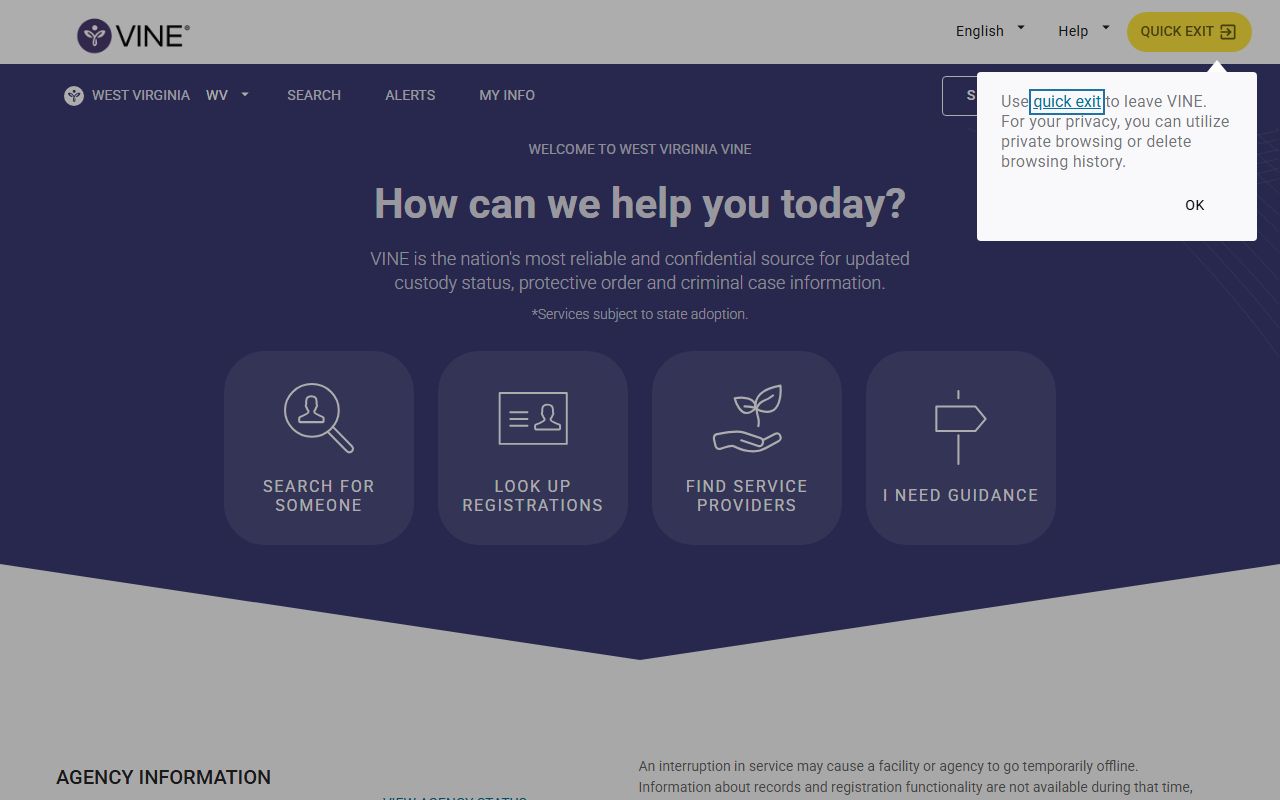
Use VINE for alerts and status monitoring after the official custody or court source has been checked.
Public Record Search
Sponsored Results